Bodies and Homes

House_9

Thrilled to announce that Caketrain Press will publish a chapbook length collection of my short stories this summer. Lake of Earth (formerly Bodies and Homes) was chosen by Michael Kimball as the runner-up manuscript in their fiction chapbook competition.

I’ve been working on the stories in Lake of Earth for over two years now. Its got seven in it — six small/medium ones, and a long, half crazed story called “Lake of Earth.” All of the statistics referred to in this post are still accurate except for one.

Caketrain has been around for ten years now, and they’ve put out collections by Ben Mirov, Sarah Rose Etter, and Ryan Call. They’re based out of Pittsburgh, and the previous fiction runner-up was “Short Dark Oracles” by Sarah Levine. I’m overjoyed to be in such good company.

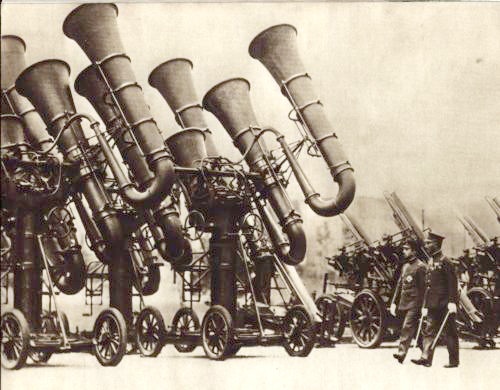
(Image Source)

Reading

Read Best American Short Stories 2012, New York Tyrant 4.1, and Christine Schutt’s Florida.

BASS 2012 has some great pieces in it — Tom Perotta, this years editor, seemed to want to strike a balance between traditional and experimental pieces, but the whole thing still felt a little safe. Some standouts: Nathan Englander’s “What We Talk About When We Talk About Anne Frank,” Roxane Gay’s “North Country,” Mike Meginnis’s “Navigators.” However, pieces like Lawrence Osbourne’s “Volcano,” and an unusually weak story from Stephen Millhauser made it more of a mixed bag.

Continue reading Reading

GODDAMN TUBA

1.

Elimae is an online literary journal founded in 1996 by Deron Bauman. In 2005 Cooper Renner took over editing and design. Kim Chinquee joined him from January to October 2010, followed by Brandon Hobson from November 2010 onward.

A few days ago Cooper Renner and Brandon Hobson announced that the forthcoming November issue would be the last.

Let’s go back a second. Elimae was founded in 1996. 1996. At that point the concept of legitimate fiction published online was mostly dismissed. Bauman saw potential in the medium though — he put out work from established writers like Gordon Lish and Diane Williams, as well as writers whose work would grow in stature over the following years (Brian Evenson, Gary Lutz).

Renner, Chinquee, and Hobson have continued that work through to the present day. The fiction is often short and sentence oriented. It is work that is meant for the internet. The design is minimal but sleek, focused on the text presented.

2.

Here, some highlights:

David Ohle – Der Kroetenkusser
Marc Peacock Brush – Congratulations! It’s a Superpower
Elizabeth Ellen – Two Fictions
Blake Butler – Gift (bonus interview by Michael Kimball)
Matthew Salesses – Two Fictions
Sarah Rose Etter – Cures
Sara Levine – Two Fictions
Lincoln Michel – A Note on the Type

And many more. Renner and Hobson have expressed some uncertainty about the continuing existence of the archives, so, you know, get on it.

3.

Elimae has published two pieces of mine this past year. They’ve run an incredibly tight ship, and usually respond to submissions in less than a week (less than a week!). The second piece, “The Fox and the Choir,” is an excerpt from a longer work that I was finishing when I submitted it. It gave me some much needed reassurance that I was on the right track.

The journal will be missed, and I wish the best for all involved.

Reading

I’m conflicted by Michel Houellebecq’s “The Possibility of an Island” and I’ll try and work that out after the jump.

Read the first two books in “The Collected Stories of Amy Hempel.” Really wonderful, minimalist prose. She doesn’t bend language quite as far as Christine Schutt, but she has more of an emphasis on point of view and some well executed metafiction elements in there.

My wife finished “A Queer and Pleasant Danger,” a transgendered ex-scientology memoir, and the story was too interesting not to read. The author, Kate Bornstein, does a fine job in laying out their narrative — it’s mostly told in a linear fashion, with just a few flashbacks and forwards to fill in the blanks. However, the post-scientology section of the book felt more like a whole book in itself. The level of detail dropped and there were fewer full scenes and more explanation. It may have also worked to structure the book into only two sections (pre and post scientology), but given the number of transitions ze goes through in the book, that may have rung false. A binary structure probably wouldn’t suit this book.

Finished the first book in Vladimir Sorokin’s “Ice Trilogy.” Beautiful, but cryptic. Felt like if I knew more about Russian history more of it would have made sense. Still, expert use of voice and repetition.

Continue reading Reading

FII – Our Great City In Wartime

Failure Is Instructive is an occasional series where I take unpublished/unpublishable stories and reexamine them. They are often very old and not representative of my current work. Notes on the story are in bold italics.

This one goes way back. I wrote it for a fiction workshop during my sophomore year of undergrad, so about six years ago. I got some good feedback but never developed the piece after the semester ended. I’m hesitant to go back and read it, because now a 21-year-old writing a quasi-surreal 5,000 word story about war sounds insufferable, but hey, it could be fun?

Our Great City in Wartime

Two months ago I woke hooked to a rattling machine. I woke with an inch wide plastic tube stuffed down my esophagus; (Pretty sure I didn’t know how to use a semicolon then. Hooray for public school.) the end of which scratched the top of my trachea.  There were smaller tubes, a quarter inch wide, poking at my eardrums. Through them I received sharp sounds like bullets flying past and low rumbles in the distance.  Two tubes were shoved up my nose several inches, and the smell of dust and gasoline trickled through.  My head was full with intrusions. (This would work better in the present tense. The “Two months ago” frame just distracts from what’s going on.)

Continue reading FII – Our Great City In Wartime

Statistics

I’ve been working on a collection. Here are some stats:

Body Count – 18

Human Disappearances – 3

Major and Minor Characters – 31

Forests – 4

Stories in First Person – 4

Stories in Third Person – 3

Average title length – 5.14 words

Previously Published – 3

Unpublished – 4

Cults – 3

Uses of the word “moon” – 5

Uses of the word “swaddled” – 4

Uses of the word “circle” – 12

Uses of the word “square” – 3

Uses of the word “bodies” – 6

Uses of the word “homes” – 7

Reading

Blew through Brian Evenson’s new collection Windeye. Some notes on the title story after the jump.

Read Sarah Levine’s collection Short Dark Oracles. Some absolutely jawdropping stories, particularly “A Promise.” There is an straightforward logic to the story — a mother and daughter’s well being is provided by the sacrifice of their relationship — but she pushes it to a terrifying conclusion. And the line “It’s like a promise,” just brings the hammer down.

Started Ryan Call’s The Weather Stations. Was initially leery of it. The first story seemed too twee, too meandering, like he was trying to substitute whimsy for plot. But his work has grown on me as the collection continues. It’s rare for an author to communicate such enthusiasm for a subject, particularly one as seemingly mundane as the weather, but Call makes it infectious. There is also a layer of menace in it that I didn’t appreciate when I began reading, perhaps because Levine’s conflicts were more clear and up front.

Continue reading Reading